

- FPGA (Field Programmable Gate Array) technologies were introduced to the field of electronic design in 1985 with the XC2064 model developed by Xilinx Inc. (Xilinx Inc., 1985). Thanks to their ability to be reconfigured at the hardware level by the user after production, FPGA chips have become essential semiconductor components in modern electronic systems, offering flexible, high-performance, and application-specific solutions. The programmable gate arrays that form the basis of FPGA chips provide the user with the opportunity to reshape the hardware architecture according to the required design through millions, or even billions in modern devices, of transistors contained within them.
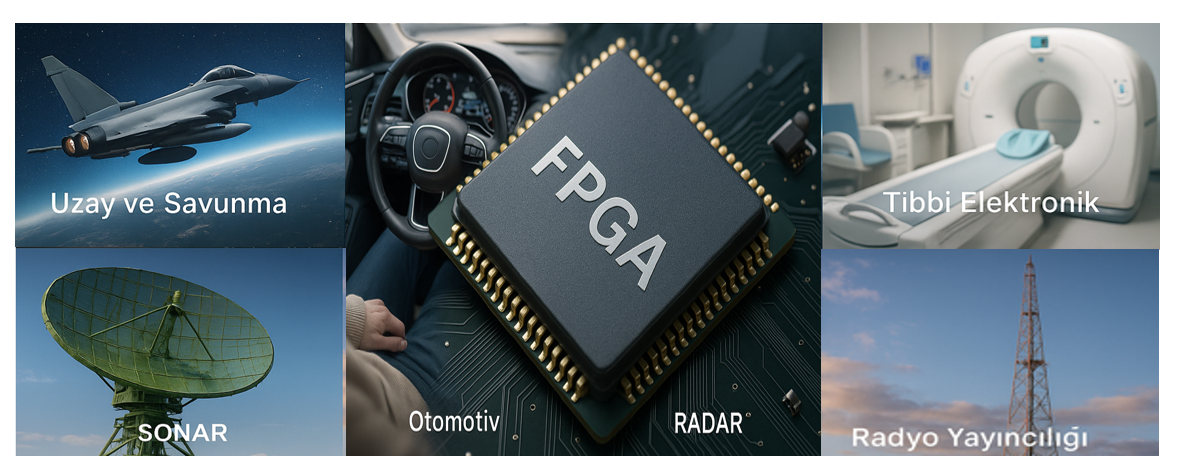
- Today, it is estimated that FPGA chips have a global market size of more than 11 billion USD, with a major portion of this market share being provided by global suppliers such as AMD (Xilinx) and INTEL (Altera). The growth of the FPGA market in recent years and the increasing processing capacity of the devices have placed this technology in a critical position across many industries. Nowadays, FPGA technologies are widely used in many fields, primarily in the aerospace and defense industries, as well as in sonar, radar, image and signal processing, medical electronics, and consumer electronics.
- Hardware description languages are utilized during the design process to effectively use the reconfigurable hardware structure offered by FPGA chips. Unlike traditional software languages, these languages are used to define the hardware structure, data flow, and timing behavior.
- Among the most widely used hardware description languages in the development of FPGA-based systems are VHDL, Verilog, and SystemVerilog. Through these languages, digital circuits can be modeled, simulated, and implemented on the target FPGA hardware.
- VHDL (VHSIC Hardware Description Language): VHDL is a hardware description language widely preferred especially in academic studies, defense industry applications, and projects where a disciplined design approach is important. Its strong syntax, strict type checking, and modular structure allow for the reliable modeling of large and complex hardware systems.
- Verilog: Verilog is another hardware description language widely used in FPGA and ASIC designs due to its simpler syntax and ease of learning. Thanks to its structure similar to the C language, it provides advantages in fast development processes, particularly in industrial applications.
- SystemVerilog: SystemVerilog is an advanced derivative of the Verilog language and is used in both hardware design and verification processes. It offers significant advantages, especially in large-scale and complex designs, thanks to its advanced data types, interface structures, and the possibilities it provides for testbench writing.
This is the heading
Core Features of FPGA
-
Short development cycle
-
High parallel computing efficiency
-
Customizable hardware architecture
-
High speed and low latency
-
Low power consumption
-
Deterministic operating capability
FPGA ARCHITECTURAL STRUCTURE
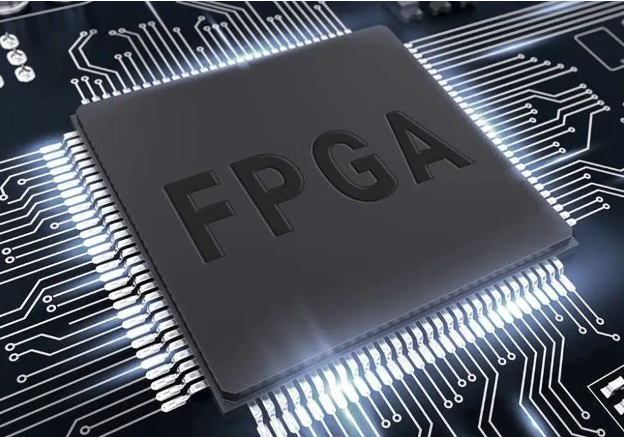
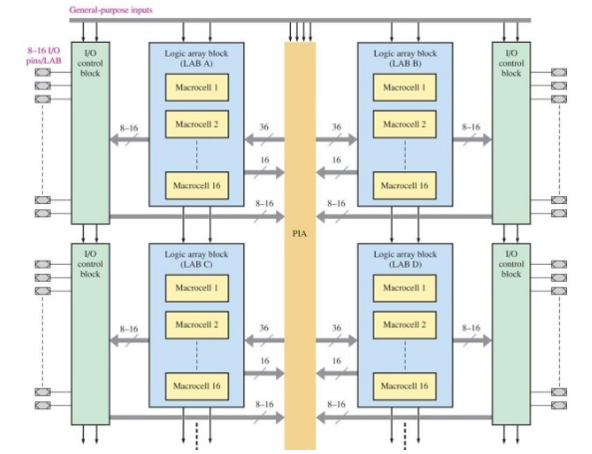
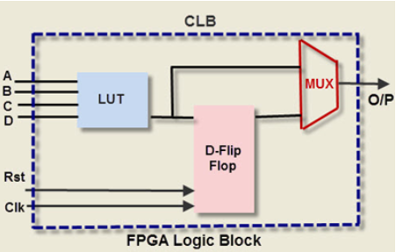
An FPGA consists of three programmable circuits: the Configurable Logic Block (CLB), the Input/Output Block (IOB), the Programmable Interconnect Resource (PIR), and static memory SRAM to store programming data.
FPGA APPLICATION AREAS
FPGA excels in parallel processing by handling multiple tasks simultaneously, which is highly useful for applications requiring high-speed data processing.